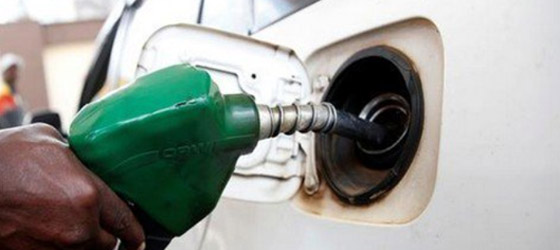
“In the past 10 years petrol tax has been increasing continuously with the sky rising price of petrol in the market. About 4,375 cases of fuel adulteration have been recorded within the country in last two years. Thus, it becomes important for every citizen to be aware of such activity.’’
By Rahul Das and Mrinaal Vidani
Petrol refers to the petroleum product manufactured from crude oil mainly through fractional distillation. The basic chemical formula for petrol is CnH2n+2. Since the past 50 years, petrol has been the main source for transportation. The manufacturing of petrol involves several complex processes which increases the cost of production and this leads to higher prices of petrol in the market. The limited quantity of raw materials and the long duration which is required for the development of crude oil is another contributing factor for higher price of Petrol.
The main concern pertaining is that, even after paying higher prices, the consumers often receive low quality petrol due to adulteration. Adulteration of petrol implies to the addition of low-quality materials to pure petrol in order to minimize the cost of production, to maximize profit and to lower the quality of petrol. The most common adulterants in petrol are PDS kerosene and diesel. Other liquids such as Hexane, Naphtha and SBP, having similar properties such as density and boiling point with that of petrol are also used as adulterants.
https://नितिन दुबे का नया एलबम ‘हाय रे मोर नील परी’ 3 जुलाई को होगी रिलीज
The dealers add adulterants to petrol without considering the damage it could cause to the vehicles. Continuous use of adulterated petrol cause damage to the engine tailpipe and other components of vehicle, which means direct compromise with safety of the consumer. Several dealers could be seen selling petrol without permission. In such cases the possibility of adulteration is maximum. Petrol adulteration hits both the vehicle and the environment. Petrol adulteration increases the emission of total hydrocarbons, carbon monoxide, nitrogen oxides and thus adds to air pollution. Increase in the content of carbon monoxide could lead to drastic health effects in humans.
Hundreds of petrol adulteration cases are being registered daily all across the country. In Hyderabad, a case of auto drivers mixing kerosene with petrol has been reported on 25 Jan 2021. With the rise in petrol prices, there is a trend of using adulterated fuel by the auto drivers who are mixing kerosene in petrol and diesel. It is leading to a severe effect on the environment and is ultimately contributing to global warming. The drivers who run vehicles on contract are using adulterated fuel as they are not concerned about the vehicle engines getting damaged.
According to a survey done by the Indian government in 2019, Maharashtra has recorded highest number of petrol adulteration near about 604 cases, followed by Uttar Pradesh with 566 cases. Adulteration of petrol is an illegal and punishable act. Any person involved in such unlawful act can be punished under Essential Commodities Act or under Section 420 IPC and also under Petroleum Act 1934. All the Indian Forensic Science Laboratories are authorized by the government to examine the adulteration in petrol under Schedule 3 Clause 8(5) of Essential Commodities Act 1955.
We would like to provide a quick tip for the consumers: Filter paper test can be used for the screening of adulteration in petrol. It is a basic test which can be easily performed by a consumer.
– Take a filter paper/general use paper
– Place 2-3 drops of petrol on top of the paper.
– If the petrol is pure, it will evaporate without leaving any stain or a patch.
– Adulterated petrol will leave behind a stain or a patch on the paper used.
A consumer should be aware of what he/she is purchasing. One must prefer to purchase petrol from government licensed petrol pumps rather than local shops. The awareness about adulteration of petrol will help to reduce the cases of quality compromise of petrol for consumers.
https://2022 Kawasaki Ninja 400 भारत में लॉन्च, जानिए कितना दमदार है नया मॉडल
About the authors-
Mr. Rahul Das is an Assistant Professor, working at Department of Forensic Science, Vivekananda Global University, Jaipur, Rajasthan, India. He has keen interest in spreading awareness among the general public regarding issues which can be addressed through science. He can be reached at dasrahulfs@gmail.com
Ms. Mrinaal Vidani is currently pursuing her BSc (Honours) in Forensic Science from Department of Forensic Science, Vivekananda Global University, Jaipur, Rajasthan, India. She is motivated towards the field and has interest in associating crime with media. She can be reached at mokshavidani95356@gmail.com